
Spanish Tutors Online: Find the Right Teacher for Your Goals
The practical adult learner’s guide to choosing live instruction, understanding costs, and finding a learning experience that fits your life.
You have downloaded an app, memorized a few phrases, and perhaps watched enough Spanish videos to recognize familiar words. Then someone speaks to you in Spanish—and suddenly your mind goes blank.
Sound familiar?
For many adults, the challenge is not a lack of interest or intelligence. It is the gap between studying Spanish and using Spanish. That is why people start searching for Spanish tutors online: they want a real person who can answer questions, correct mistakes, and help turn scattered knowledge into confident conversation.
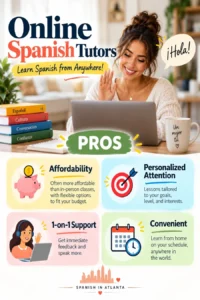
But choosing a tutor is not as simple as picking the first friendly face on a website. Some services connect you with independent teachers. Others offer self-paced software, live group classes, or structured private instruction. Each can be useful, depending on what you need.
This guide explains what to look for, what questions to ask, and how to choose an option that supports your goals—not just your calendar. Whether you are preparing for a trip, communicating with relatives, advancing at work, or finally making good on a personal promise to learn Spanish, you deserve a plan that makes sense.
Determined to work with a Spanish Tutor Online?
Go straight to one of our popular offers.
Explore our Signature OfferWhat Makes a Good Online Spanish Tutor?
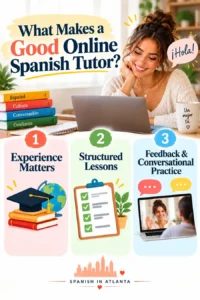
A polished profile and an impressive list of languages are not enough. When evaluating a teacher, look beyond personality and ask how the lessons will help you progress.
Teaching experience matters—but so does teaching method
Speaking Spanish fluently and teaching Spanish effectively are different skills. A fluent speaker may be wonderful company, yet struggle to explain why a sentence sounds unnatural or how to help a beginner build confidence.
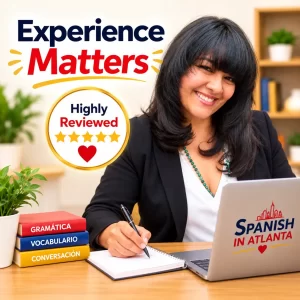
Look for evidence that the instructor can assess your level, explain concepts clearly, adapt to different learning styles, and choose exercises that suit your goals. Experience teaching adults is especially relevant because adult students often bring specific needs, limited time, and strong opinions about what they want to learn.
Ask a practical question: “If I understand Spanish but freeze when I try to speak, how would you approach my lessons?” A thoughtful answer should describe a process, not simply promise that you will become fluent quickly.
Conversation should be purposeful
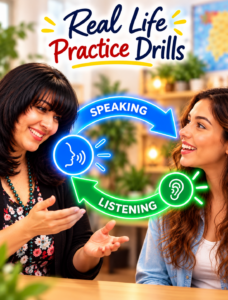
Conversation practice is valuable, but it should not mean chatting randomly for an hour. Effective speaking activities might involve role-playing a workplace situation, retelling a short story, asking follow-up questions, or practicing how to recover when you forget a word.
The instructor should be able to adjust the difficulty. If every sentence feels effortless, you may not be stretching enough. If every exchange feels impossible, the lesson may need more support and preparation.
Feedback should help you improve
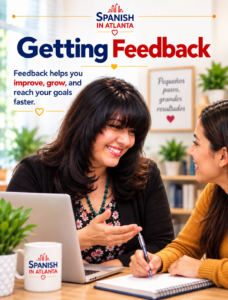
Corrections matter, but timing matters too. A teacher who interrupts every few seconds can make conversation feel like an obstacle course. A teacher who never corrects you may allow avoidable mistakes to become habits.
A balanced approach allows you to communicate while giving clear feedback on recurring errors, pronunciation, word choice, and sentence structure. Ask whether you will receive notes, practice activities, or recommendations for what to review afterward.
Look for a learning path

Your tutor does not need to follow a rigid textbook, but you should know where you are going. A useful plan connects your starting level to a realistic set of milestones: introducing yourself comfortably, asking questions, handling familiar situations, understanding longer responses, and gradually speaking with greater flexibility.
The milestones will vary by student. What matters is that progress is observable. “I feel more confident” is encouraging; “I can now handle a five-minute conversation about my work without switching to English” is more concrete.
Reliability and scheduling are part of quality
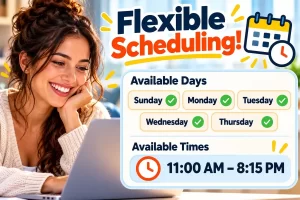
An excellent teacher is not the right match if their availability never aligns with yours. Before paying, confirm the lesson length, scheduling process, cancellation policy, time zone, and whether you will work with the same instructor consistently.
If you plan to study several times each week, consistency becomes particularly important. Frequent changes of instructor can require repeated explanations of your background and goals, although some learners enjoy the variety of speaking with different people.
Four Ways to Learn Spanish Online—and How They Compare
When you search for Spanish tutors online, you may encounter several very different kinds of learning services. Understanding the distinction can save you time and money.
1. Online tutoring platforms

These websites connect students with individual tutors, often allowing you to browse profiles, specialties, languages, schedules, and prices. Their biggest advantage is choice. You may find someone who specializes in business Spanish, exam preparation, travel conversations, or a particular regional variety of the language.
The trade-off is that the experience can depend heavily on the individual instructor. Two tutors on the same platform may use entirely different materials, lesson structures, and teaching methods. That flexibility is appealing if you enjoy shopping around, but it also means you may need to do more homework before committing.
Best fit: Students who want a wide selection of instructors or have highly specific scheduling or subject preferences.
2. Language-learning apps
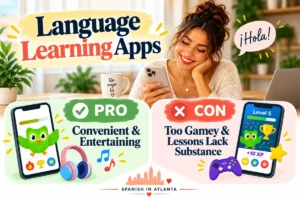
Apps are convenient for short practice sessions. They can help you review vocabulary, recognize patterns, maintain a daily routine, and make use of spare moments during the day.
Their limitations depend on the app. Some now include speech recognition, conversation simulations, or access to human teachers. Even so, automated exercises do not necessarily provide the same nuanced guidance as a skilled instructor who understands your personal history, recurring mistakes, and communication goals.
Best fit: Independent learners who want a convenient supplement or a low-commitment introduction to Spanish.
3. Spanish-learning software and recorded courses

Digital courses can offer a more organized sequence than a collection of unrelated videos. Lessons may include explanations, listening activities, exercises, and assessments. You can usually pause, repeat, and review material as often as necessary.
The challenge is accountability and adaptation. A recorded explanation cannot always recognize why you are confused, change the lesson in response to your answer, or help you negotiate an unexpected turn in a real conversation.
Best fit: Self-directed students who enjoy independent study and can maintain their own schedule.
4. Dedicated instructors and structured live programs

A dedicated teacher or teaching program may combine live conversation, a planned curriculum, personalized assignments, and ongoing feedback. Rather than selecting a different tutor each week, you may build continuity with someone who remembers your strengths, goals, and challenges.
The main consideration is fit. You should make sure the instructor’s teaching style, availability, level of personalization, and program terms match what you want. A structured approach can be reassuring, but only if the structure serves your needs.
Best fit: Adults who want sustained guidance, regular speaking practice, and a clear direction for their studies.
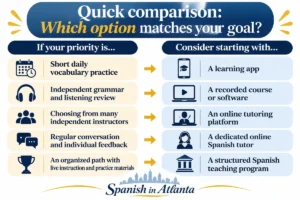
You do not have to choose only one. Many successful study routines combine live lessons with independent practice. A tutor helps you identify what to work on; the materials you use between meetings help reinforce it.
7 Questions to Ask Before Hiring an Online Spanish Tutor:

Ask the same questions of any instructor or program you are seriously considering:
- Will I work with the same teacher regularly?
- How do you determine my current Spanish level?
- How much time will I spend actually speaking?
- What learning materials are included?
- How will you identify and address recurring mistakes?
- What are the scheduling and cancellation rules?
- How will we know whether I am making progress?
Pay attention not just to the answers, but to how the provider responds. Clear explanations, realistic expectations, and a willingness to discuss your goals are positive signs.
Looking for Consistent Online Spanish Instruction? Meet Spanish in Atlanta

If your goal is to speak Spanish more comfortably—not simply collect completed exercises—Spanish in Atlanta offers another way to learn.
Despite the name, the school provides live online Spanish instruction to adults across the United States. Lessons take place over Zoom, so you can work with an instructor without living in Georgia.
Spanish in Atlanta is led by Delilah Ortiz, a multilingual Spanish educator with 33 years of teaching experience. Her approach combines live interaction with proprietary learning materials, including ebooks, study guides, exercises, quizzes, and listening practice.

Rather than treating every student as a blank slate, the program begins by discussing your level and goals. Lessons can focus on everyday conversation, listening comprehension, pronunciation, practical vocabulary, or specific grammar concepts that are holding you back.
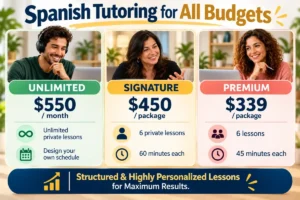
What makes the Unlimited Option different?
For adults who want to practice frequently, Spanish in Atlanta offers an Unlimited Private Spanish Lessons package. The current published offer is $550 for one month, with 45-minute live, one-on-one Zoom sessions that students can schedule during the program’s designated hours, subject to availability and terms.
The published scheduling window is Sunday through Thursday, 11:00 a.m. to 8:15 p.m. Eastern Time. Students are encouraged to arrange lesson times in advance. The package includes access to the school’s learning materials and has specific rescheduling and cancellation conditions, so review the product page before purchasing.
Our Signature Lessons Package:
Excellent option for serious students that don’t want an intensive or accelerated option like the Unlimited package above but want a nice steady pace with assignments and time to digest the lesson material taught. You have control over the schedule Sun- Thurs 11-8:15pm Eastern Time. The action plan we create for you will be based only on what matters most to you and what you need to improve upon.
Our Premium Lessons Package:
Is a great starting point and an excellent budget option for students that want 1-on-1 lessons and all the benefits that come with that but without the typical price. Everything is included. Same flexible schedule & personalized lesson plans!
Need Help Deciding Which Option is Best for You?

For students who specifically want beginner classes with a small group, review the upcoming adult beginner Spanish class schedule. Those classes serve a different learning preference from one-on-one tutoring.
How to Get Better Results From Any Online Spanish Tutor

Finding a good teacher is the beginning, not the finish line. Your habits between lessons make a meaningful difference in how useful those sessions become.
Arrive with a communication goal
Instead of saying, “I want to learn more Spanish,” try, “I want to describe my weekend without translating every sentence,” or “I want to ask follow-up questions when a customer explains a problem.” Specific goals help an instructor design focused practice.
Make speaking a regular habit
You do not need to hold an hour-long conversation every day. Describe what you are cooking, summarize a short video aloud, or answer a few familiar questions without reading a script. The objective is to practice retrieving language when you need it.
Revisit corrections
When your teacher identifies a recurring mistake, turn it into a small exercise. Write three useful examples, say them aloud, and try them in your next conversation. Repeatedly reviewing the same point is often more productive than collecting an endless list of new rules.
Include listening practice
Real conversations involve different accents, speeds, and ways of expressing an idea. Short recordings, stories, and conversations can help you get comfortable with language outside a textbook. Choose material you can follow with some effort rather than something so difficult that every sentence becomes a mystery.
Track what you can do
Once a month, record yourself answering a familiar question or note which situations now feel easier. You might discover that you pause less often, understand more of a story, or can explain an idea that previously required English. Those practical changes are worth noticing.
Most importantly, allow yourself to sound like a learner. Waiting until every sentence is perfect is a reliable way to avoid the very conversations that help you improve.
Can’t Afford a Spanish Tutor Online? Consider Our Small Group Courses.

This is one of Spanish in Atlanta’s most popular options. Our class size is limited to 4 students. Everything is included. Learn with just a handful of other students and still get the professional feedback, guidance and support you need!

You may also like

How Long Does It Take to Learn Spanish


